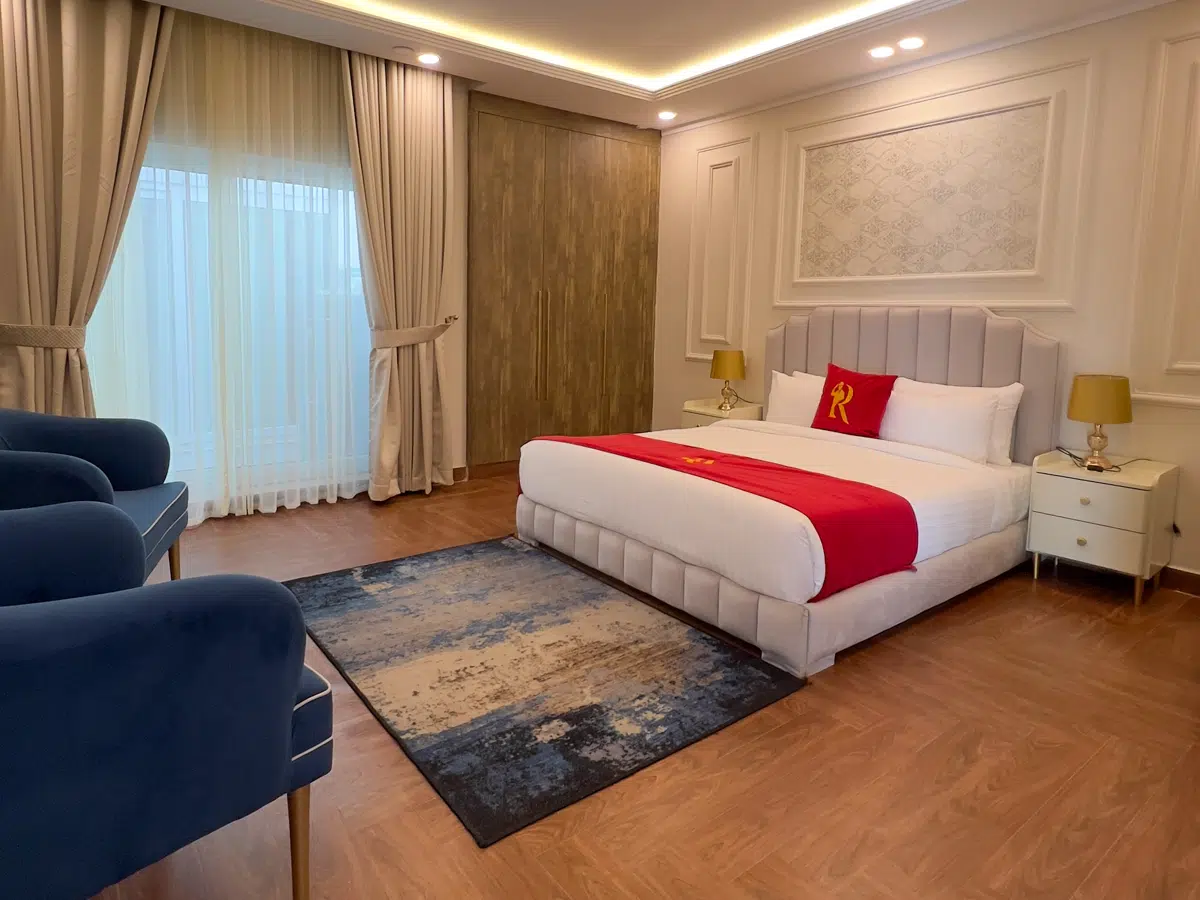
Planning a trip for a big group, whether it’s a joint family getaway, a friends’ reunion, or a wedding party, comes with one question that can make or break the experience: where does everyone sleep? The two most common options are booking a large family suite or reserving several separate rooms. Both can work well, but they suit very different travel styles.
Let’s break down how each option performs on cost, comfort, privacy, convenience, and group dynamics, so you can pick the one that fits your trip.
A family suite is a large accommodation, usually with two or more bedrooms, a shared living or lounge area, and sometimes a kitchenette or dining space. Everyone stays under one roof, behind one door, and shares common spaces.
Suites are designed with families in mind, which makes them popular for parents traveling with children, grandparents, and relatives who want to stay close together.
Booking multiple rooms means reserving separate, standard hotel rooms, either side by side, on the same floor, or in the same building. Each room has its own bathroom, beds, and door, and each sub-group (a couple, a set of siblings, a family unit) gets its own space.
This option offers flexibility, since you can mix room types, adjust the number of rooms as your group changes, and give each household its own territory.
Budget is usually the first factor, so let’s start there.
Family suites often look more expensive on paper, but the per-person cost can be lower when you fill every bed. A suite that sleeps eight at a single rate can beat four double rooms, especially when you factor in shared amenities like a lounge or kitchenette that save money on meals and snacks.
Multiple rooms can be cheaper if your group is small or if you only need basic beds. They also let you control spending: couples who want a cheaper room can take one, while those who want an upgrade can choose a better category. However, when you add up four or five room rates, taxes, and service charges, the total can climb quickly.
Verdict: For groups of six to ten who are happy sharing space, a suite is often the better value. For mixed budgets, multiple rooms give you more control.
This is where the two options differ most.
In a family suite, you get shared living space, which is great for evening chats, playing cards, or keeping an eye on young children. But privacy is limited. Bathrooms may be shared, bedtimes may clash, and early risers can disturb late sleepers.
With multiple rooms, each household gets true privacy. Parents can put kids to bed on their own schedule, couples can have quiet time, and teenagers or older relatives can rest without worrying about noise. The trade-off is that the group is more spread out.
Verdict: If privacy matters, especially for multi-generational groups, separate rooms win. If togetherness is the goal, the suite wins.
A family suite makes logistics simple. One check-in, one key, one place to gather bags, and one space to meet before heading out. With children or elderly travelers, having everyone in one spot makes it easier to keep track of people and belongings. You also have a shared space to store snacks, warm milk, or relax between activities.
Multiple rooms require more coordination. You may need to confirm that rooms are adjacent or on the same floor, collect several keys, and arrange meeting points. If rooms end up on different floors, it can be harder to manage kids and seniors.
Verdict: Suites are easier to manage. Rooms require better planning but reward you with flexibility.
The right choice often depends less on the accommodation and more on who is coming along.
For families with kids, safety is a big concern. In a suite, children stay within sight and earshot of adults, and there is a single entrance to monitor. In separate rooms, kids may wander between rooms or hallways, so you’ll need clear rules.
On the other hand, a suite can feel crowded when too many people share a few beds, so check the real sleeping capacity before booking.
Family suites are limited in number at most properties, especially in peak seasons. If you’re traveling during holidays or summer vacations, suites can sell out quickly. Standard rooms are more plentiful, which makes them easier to book at short notice.
Multiple rooms also offer flexibility if plans change. If two people drop out, you can cancel one room. With a suite, you’re locked into one large booking.
Many large groups find that mixing both options works best. Book a family suite for the group that needs shared space, such as parents with young kids, and add one or two standard rooms for couples, teens, or elders who want quiet. You get a central gathering place without sacrificing privacy.
If you’re heading to the hills for your next group trip, it helps to compare what’s on offer before booking. For example, you can explore a range of rooms in Murree to see which layouts and room categories fit your group size and budget.
Choose a family suite if:
Choose multiple rooms if:
Choose a combination if:
There is no single winner in the family suite vs. multiple rooms debate. A family suite is more practical when togetherness, supervision, and simplicity matter most. Multiple rooms are better when privacy, flexibility, and individual comfort come first. For big groups, a smart mix of both often delivers the best experience.
Before you book, think about who is traveling, how much shared time you want, and what each person needs to rest well. Whichever option you choose, book early, confirm bed arrangements, and ask about room proximity. A little planning goes a long way toward a smooth, memorable group trip.